Comparison
Vet Tech vs Vet Assistant: Training, Credential and Pay
What's the Difference Between a Vet Tech and a Vet Assistant?
Vet tech vs vet assistant comes down to training and credential: a vet tech finishes a two- or four-year veterinary technology degree, passes the VTNE and, in 43 of the 44 states confirmed, holds a state credential; a veterinary assistant trains on the job or in a certificate of about nine months and needs no license. BLS puts median pay at $47,380 for vet techs and $38,150 for vet assistants (May 2025). Compare vet assistant programs and vet tech schools.
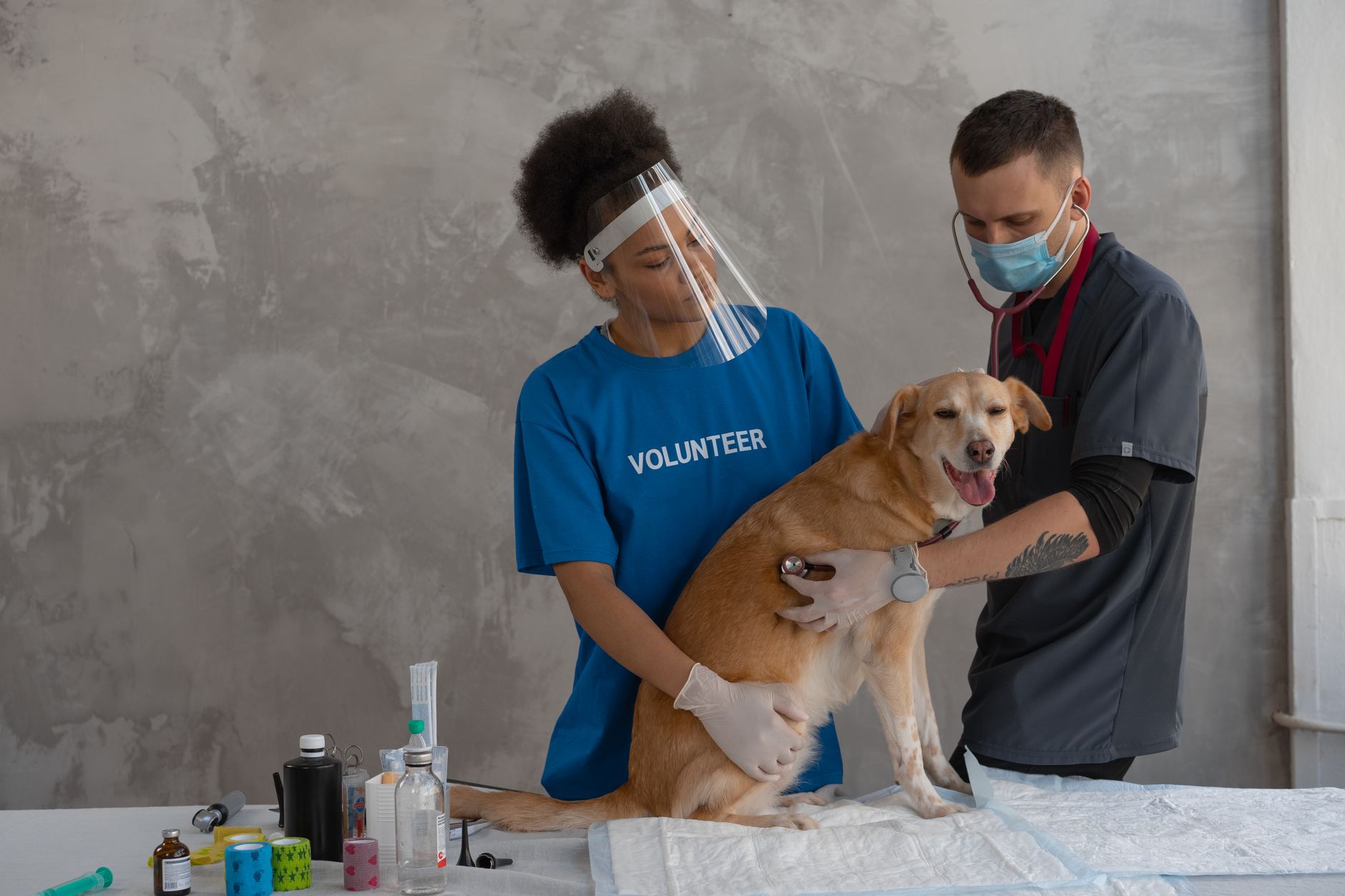
Vet Tech vs Vet Assistant, Side by Side
Both jobs put you on the clinic floor with animals. The difference is how much medicine you’re trained and allowed to do, and that comes from the training and the credential.
| Veterinary technician | Veterinary assistant | |
|---|---|---|
| Training | Veterinary technology degree (associate or bachelor’s) | High school diploma plus on-the-job training or a certificate |
| Typical program length | Median 80 weeks (104 programs stating one) | Median 39 weeks (49 programs stating one) |
| Typical credits | Median 71 credits | Median 36 credits |
| National exam | VTNE, run by AAVSB | None required; NAVTA’s AVA exam is optional |
| State credential | License, registration or certification in 43 of 44 confirmed states | None |
| Median pay (BLS, May 2025) | $47,380 a year, $22.78 an hour | $38,150 a year, $18.34 an hour |
| Top tenth earn more than | $63,180 | $49,150 |
| Employed (BLS, May 2025) | 129,140 | 126,580 |
| Projected growth, 2025-35 | 9% | 9% |
Programs verified on schools’ own pages: 197 vet tech programs and 85 veterinary assistant programs. BLS counts veterinary assistants together with laboratory animal caretakers, so the assistant pay and job counts cover both.
What a Veterinary Assistant Does All Day
A veterinary assistant keeps the clinic running and the animals cared for. BLS lists the work as feeding, bathing and exercising animals, cleaning and disinfecting cages, kennels and exam and operating rooms, and giving the medications or immunizations a veterinarian prescribes. NAVTA puts it simply: assistants help the veterinarian or the veterinary technician with their daily tasks.
Most assistants learn on the job. BLS says most enter with a high school diploma and receive short-term on-the-job training, and some work part time.
Veterinary services employ 86% of veterinary assistants and laboratory animal caretakers. Educational services employ 5%.
What a Vet Tech Does That an Assistant Isn’t Trained for
NAVTA describes the vet tech as trained to be the veterinarian’s nurse, laboratory technician, radiography technician and anesthetist. BLS lists the core tasks: the medical tests that help a veterinarian diagnose an animal, restraining animals for exams, giving anesthesia, taking x-rays, collecting case histories and giving the medications a veterinarian prescribes.
That’s the line in day-to-day terms. The assistant cleans, feeds and gives the medications a veterinarian prescribes. The vet tech runs the diagnostic tests, gives anesthesia and takes the x-rays. And because 43 of the 44 states whose rules were confirmed issue a vet tech credential, the vet tech is the one whose title is protected by a state board. Read what a veterinary technician does for the full job.
Vet Assistant Training Programs and What They Cost
A veterinary assistant certificate is short and affordable next to a vet tech degree, but the programs differ a lot in hours, format and price.
| Program | Format | Length | Hands-on hours | Cost as published |
|---|---|---|---|---|
| Escondido Adult School, CA | On campus | Two courses over two semesters | $1,400 for both courses | |
| Pima Medical Institute-Phoenix, AZ | On campus | About 9 months | 240-hour externship | |
| Carrington College-Tucson, AZ | Blended | 36 weeks | 180-hour externship | |
| High Desert Medical College, CA | Hybrid | 35 weeks (morning) or 43 (evening) | 200 externship hours | |
| Medical Career & Technical College, KY | On campus | 36 weeks | 180-hour externship | $10,150 tuition plus fees |
| Windward Community College, HI | On campus or hybrid | Two semesters | Hybrid track: 20 hours a week under a veterinarian | About $4,061 for residents (Fall 2020 basis) |
| Stautzenberger College-Maumee, OH | Online | 12 months | $16,100 tuition (assistant and grooming diploma) |
Blank cells mean the school doesn’t list that figure on its program page.
Three of the 85 assistant programs run fully at a distance, including the career-training courses offered through the University of New Hampshire and the College of Southern Idaho. Eighteen are hybrid. The vet assistant programs ranking lists every verified one.
Getting in and Getting Through: How the Training Differs
The gap between the two programs starts at the front door. Veterinary assistant programs are mostly open to anyone who meets the basics. Joliet Junior College’s Veterinary Assistant Certificate has open enrollment each semester for students 16 or older. Pima Medical Institute asks for a high school diploma or GED, an entrance exam that may be waived, and an interview.
Vet tech programs are selective. Joliet’s vet tech track is competitive: you apply to the college first, then to the program, and you need the rabies vaccine series. Yakima Valley College accepts about 25 students each fall. Coastal Alabama Community College caps each cohort at 24 and ranks applicants on points.
The hands-on part differs in size, too. Assistant certificates that list an externship set it at 150 to 240 hours. Vet tech degrees ask for more: Baker College in Jackson requires a 240-hour unpaid internship, Southern Regional Technical College gives its clinical internship 12 credit hours, and Pima’s vet tech externship runs 240 to 465 hours depending on the campus. Then comes the VTNE, which an assistant never takes. The VTNE guide explains the exam.
Vet Tech vs Vet Assistant, Side by Side
| Vet tech | Vet assistant | |
|---|---|---|
| Training | Two-year associate degree, usually AVMA accredited (BLS) | Short-term on-the-job training is most common (BLS) |
| Exam and credential | VTNE, then a state credential in 43 of 44 confirmed states | Certification is optional (BLS) |
| Typical duties | Medical tests, anesthesia, x-rays, case histories, prescribed medications | Feeding, bathing and exercising animals, cleaning cages and rooms, prescribed medications or immunizations |
| Median pay | $47,380 | $38,150 |
| Employed | 129,140 | 126,580 |
| Programs verified here | 197 | 84 |
Duties and training from the BLS Occupational Outlook Handbook; pay from BLS OEWS May 2025 (vet assistants are counted with laboratory animal caretakers, SOC 31-9096).
Veterinary Assistant Programs
- Ross Medical Education Center-Huntsville vet assistant programHuntsville, AL · 36 weeks · NAVTA approved
- Carrington College-Mesa vet assistant programMesa, AZ
- Carrington College-Phoenix North vet assistant programPhoenix, AZ
- Carrington College-Tucson vet assistant programTucson, AZ
- Mesa Community College vet assistant programMesa, AZ
- Pima Medical Institute-East Valley vet assistant programMesa, AZ
- Pima Medical Institute-Phoenix vet assistant programPhoenix, AZ
- Pima Medical Institute-Tucson vet assistant programTucson, AZ
- Allan Hancock College vet assistant programSanta Maria, CA
- Central Coast College vet assistant programSalinas, CA · 38 weeks
- Escondido Adult School vet assistant programEscondido, CA · $1,400
- Foothill College vet assistant programLos Altos Hills, CA
- High Desert Medical College vet assistant programLancaster, CA · 35 weeks (morning) or 43 weeks (evening)
- Stellar Career College vet assistant programModesto, CA · 36 weeks (9 months)
- Community College of Denver vet assistant programDenver, CO
- Front Range Community College vet assistant programWestminster, CO · 1-2 semesters · NAVTA approved
- Pickens Technical College vet assistant programAurora, CO · 2 semesters (about 1 year)
- Pima Medical Institute-Aurora vet assistant programAurora, CO · 9 months
- Pima Medical Institute-Colorado Springs vet assistant programColorado Springs, CO · 9 months
- Pima Medical Institute-Denver vet assistant programDenver, CO · 9 months
- Cape Coral Technical College vet assistant programCape Coral, FL · Approximately 7 months
- Eastern Florida State College vet assistant programMelbourne, FL
- HCI College vet assistant programWest Palm Beach, FL · As little as 10 months
- Lake Technical College vet assistant programEustis, FL · Approximately 25 weeks · $2,160
- Lorenzo Walker Technical College vet assistant programNaples, FL
- Southern Technical College, Fort Myers vet assistant programFort Myers, FL · 10 months
- Southern Technical College, Orlando vet assistant programOrlando, FL · 10 months
- St Petersburg College vet assistant programSt. Petersburg, FL
- Gwinnett Technical College vet assistant programLawrenceville, GA
- Ogeechee Technical College vet assistant programStatesboro, GA
What the Credential Changes, State by State
The state credential is the clearest dividing line, and its name changes with the state:
- Texas licenses vet techs as Licensed Veterinary Technicians (LVT). You need an AVMA-accredited degree, the VTNE and the Texas State Board Exam, and alternate routes aren’t accepted.
- California registers them as Registered Veterinary Technicians (RVT), with four education pathways and the VTNE.
- Ohio registers them, and requires graduation from a board-approved veterinary technology college.
- Florida is the one confirmed state whose board doesn’t issue a vet tech credential. Voluntary certification runs through the FVTA or FVMA.
That board credential is what separates the two jobs on paper. The vet tech license guide covers all 44 confirmed states.
Veterinary Assistant Certification: Is It Worth It?
You don’t need it to get hired. BLS says certification isn’t mandatory. The best-known option is NAVTA’s Approved Veterinary Assistant (AVA) designation:
- You must graduate from a NAVTA-approved program. Nine of the 85 verified assistant programs say they’re NAVTA approved, including Ross Medical Education Center in Huntsville and Front Range Community College.
- The exam fee is $100, and a veterinarian, credentialed technician, program instructor or testing center proctors it.
- The AVA renews every two years with at least ten hours of veterinary continuing education.
The AVA shows an employer you finished structured training. It doesn’t let you do vet tech work, and it doesn’t count toward the VTNE.
The Pay Gap and Where It Comes From
BLS puts the vet tech median at $47,380 a year and the veterinary assistant median at $38,150 (May 2025). The bottom of the ranges are closer than the top: the lowest tenth of vet techs earn under $35,710 and the lowest tenth of assistants under $30,120, while the top tenth of vet techs clear $63,180 against $49,150 for assistants.
That top end is the argument for the degree. A credentialed vet tech can move into anesthesia, emergency, dentistry or research work and the specialty titles behind them. An assistant’s ceiling is lower unless they go back to school. The vet tech salary guide has the figures for every state.
Both jobs carry the same physical risk. BLS lists both occupations among those with the highest rates of injuries and illnesses, and both may work nights, weekends or holidays.
Starting as an Assistant, Finishing as a Tech
You don’t have to choose once. Several schools build the assistant certificate into the front of the vet tech degree:
- Pima Medical Institute runs its vet tech associate degree in about 18 months, including the veterinary assistant certificate courses. At Pima Medical Institute-Renton, 91% of 58 first-time candidates passed the VTNE in 2023-2025.
- Central Coast College in Salinas makes year one its veterinary assistant program and year two the vet tech year, 84 weeks in all.
- St. Petersburg College has students finish its Veterinary Assisting certificate before the vet tech associate degree.
- Joliet Junior College offers both a veterinary assistant certificate and the AVMA-accredited vet tech degree.
Working as an assistant while you finish prerequisites also covers the shadowing hours many vet tech programs ask for, and it’s the kind of clinic job distance vet tech programs require. Jefferson State Community College’s distance program, for one, asks for 360 hours of veterinary experience before admission.
Which One Should You Choose?
Choose the vet assistant route if you want into a clinic within a year, you aren’t sure animal medicine is for you, or you can’t stop working for two years. A certificate like Escondido Adult School’s two-course pathway costs $1,400.
Choose the vet tech route if you want the medical side: anesthesia, lab work, imaging and nursing care, plus a state credential that moves with you. Expect about two years and an AVMA-accredited program. Start with the how to become a vet tech guide and check your state’s rules with the credential checker.
Choose both, in order, if you want a paycheck now and the credential later. Find programs near you with the school finder.
Frequently Asked Questions
What Does a Veterinary Assistant Do?
BLS describes the job as feeding, bathing and exercising animals, cleaning and disinfecting cages, kennels and exam and operating rooms, and giving the medications or immunizations a veterinarian prescribes. NAVTA describes the role as assisting the veterinarian or the veterinary technician in their daily tasks.
Is a Vet Tech Higher Than a Vet Assistant?
Yes, in training and credential. A vet tech holds a veterinary technology degree and, in most states, a state license, registration or certification after passing the VTNE. A vet assistant usually has a high school diploma and short-term training. The pay gap follows: a $47,380 median for vet techs against $38,150 for vet assistants (BLS, May 2025).
How Long Is a Vet Assistant Training Program?
Among the 49 veterinary assistant programs that state a length, the median is 39 weeks. Pima Medical Institute in Phoenix runs about 9 months with a 240-hour externship; High Desert Medical College runs 35 weeks in the morning or 43 in the evening.
Do You Need Veterinary Assistant Certification?
No. BLS says certification isn't mandatory. The NAVTA Approved Veterinary Assistant (AVA) designation is open to graduates of a NAVTA-approved program, costs $100 for the exam and renews every two years with at least ten hours of continuing education.
Can a Vet Assistant Become a Vet Tech?
Yes, and several programs are built for it. Pima Medical Institute's vet tech associate degree starts with its veterinary assistant courses, Central Coast College's first year is its veterinary assistant program, and St. Petersburg College has students finish its Veterinary Assisting certificate before the associate degree.
Keep Reading
- Vet Tech SalaryWhat veterinary technicians earn nationally and in every state (BLS OEWS), from the bottom tenth to the top
- Vet Tech CareersThe jobs a veterinary technology degree leads to, the NAVTA specialty academies behind the VTS title, and practice management, research and industry roles
- What a Vet Tech DoesWhat a veterinary technician does each day, where vet techs work, the degree and credential the job needs and what it pays
- How to Become a Vet TechThe AVMA-accredited degree, the VTNE and the state credential that take you from no experience to a credentialed veterinary technician
- Online Vet Tech ProgramsWhich distance veterinary technology programs are AVMA accredited, what their clinical mentorships require and how their VTNE results compare
- Associate vs Bachelor'sHow long each veterinary technology degree takes, how many credits it runs, and which jobs a bachelor's degree adds
- Best Vet Tech SchoolsEvery verified program, ranked
- Vet Tech License by StateRVT, LVT and CVT rules in every confirmed state
Sources
- BLS Occupational Outlook Handbook: Veterinary Assistants and Laboratory Animal Caretakers
- BLS Occupational Outlook Handbook: Veterinary Technologists and Technicians
- BLS OEWS May 2025: Veterinary Assistants and Laboratory Animal Caretakers (31-9096)
- NAVTA: Approved Veterinary Assistant program
- NAVTA: Frequently asked questions
- U.S. Bureau of Labor Statistics, Occupational Outlook Handbook: Veterinary Technologists and Technicians, read November 2026
- U.S. Bureau of Labor Statistics, Occupational Outlook Handbook: Veterinary Assistants and Laboratory Animal Caretakers, read November 2026
- U.S. Bureau of Labor Statistics, Occupational Employment and Wage Statistics, May 2025: Veterinary Technologists and Technicians (29-2056)