Career Guide
How to Become a Vet Tech
How Do You Become a Vet Tech?
Here is how to become a vet tech: finish an AVMA-accredited veterinary technology degree (usually a two-year associate degree), pass the Veterinary Technician National Exam (VTNE), then apply for your state's license, registration or certification. Of the 44 states whose rules were confirmed in November 2026, 43 issue a vet tech credential and 29 name the VTNE. Across the 88 programs that publish one, the median VTNE first-time pass rate is 72%, and BLS puts median pay at $47,380 (May 2025). Start with the best vet tech schools ranking.
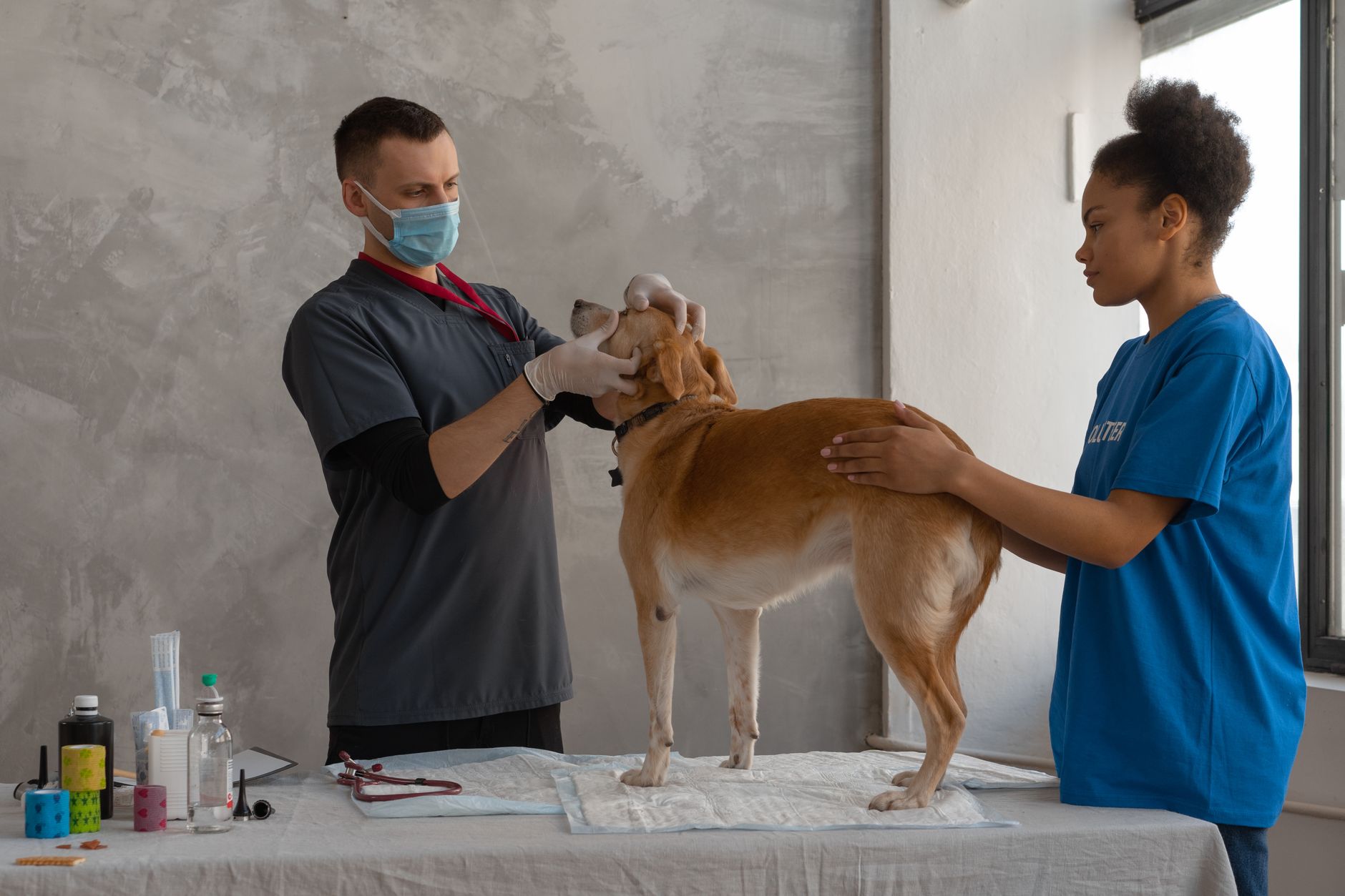
The Path From No Experience to Credentialed Vet Tech
The order matters here, because each step unlocks the next one. Here’s the sequence most people follow:
- Get the prerequisites done. Most programs want a high school diploma or GED, a few college courses in biology, English and math, and often some time shadowing in a clinic.
- Finish an AVMA-accredited veterinary technology degree. That’s usually a two-year associate degree. 148 of the 197 vet tech programs verified on schools’ own pages state AVMA CVTEA accreditation.
- Pass the VTNE. It’s a three-hour, 170-question exam run by AAVSB. Your program director adds you to a graduate roster before you can sit for it.
- Apply for your state credential. Depending on the state, that’s a license (LVT), a registration (RVT) or a certification (CVT). Some states add their own law exam.
- Keep it current. Most states require continuing education at each renewal.
That’s the whole route. The rest of this page is about doing each step well: choosing a program whose graduates pass the exam, paying a sane price for it, and knowing what your state asks for before you enroll.
How to Become a Vet Tech: Start With an Accredited Program
The program decision is the one that’s hard to undo. The VTNE’s main eligibility pathway is graduation from a program accredited by the AVMA Committee on Veterinary Technician Education and Activities (CVTEA), and 23 of the 44 states whose rules were confirmed write AVMA accreditation into their credential rules. Texas, for example, requires graduation from an AVMA-accredited program and accepts no alternate routes (Texas credential guide).
So check two things on any program page before anything else: the AVMA status, and the VTNE first-time pass rate the program publishes. Accredited programs publish a three-year first-time rate. Across 88 programs, the median is 72%, 30 programs report 80% or higher, and the range runs from 33.3% to 100%.
Those rates say a lot about how well a program prepares you. Southern Regional Technical College in Georgia reports 100% for 2023-2025 across 15 first-time candidates. Baker College in Jackson, Michigan, reports 95.7% across 23 candidates. At the other end, Central Coast College in Salinas reports 33.3% for the same period. Read the candidate count next to every rate: 15 test-takers can swing a percentage far more than 125 can, which is the cohort behind Joliet Junior College’s 62.8%.
The VTNE pass rate ranking sorts every program by its published rate, and the AVMA-accredited programs list shows each program’s accreditation status.
Which Program Fits Your Life
Most vet tech programs are full-time and on campus: 141 of the 197. But there are real options if you work full time or live far from a college.
| Program | Format | Length | VTNE first-time rate | Cost as published |
|---|---|---|---|---|
| Foothill College, CA | On campus | Two-year associate | 89% (2023-2025) | $2,852 tuition, in-state, 2026 |
| Gateway Technical College, WI | On campus | Two years full time | 69% (2023-2025, 32 candidates) | $11,613 program total |
| Jefferson State Community College, AL | Distance | Two-year program | 73.3% (2025) | |
| Coastal Alabama Community College, AL | Hybrid | Five semesters | 65% (2023-2025) | $204 per credit, in-state |
| Pima Medical Institute-Renton, WA | On campus | About 18 months | 91% (2023-2025, 58 candidates) | |
| Morehead State University, KY | On campus | 4 years (bachelor’s) |
Blank cells mean the program doesn’t list that figure on its own pages.
If you work full time, look at the 11 distance programs and 24 hybrid ones. The catch is the clinical work. Jefferson State requires you to work or volunteer at least 20 hours a week in an Alabama veterinary facility, plus occasional visits for large and laboratory animal requirements. Blue Ridge Community College in Virginia wants 20 hours a week for a veterinarian who serves as your preceptor and a 350-hour externship. Distance programs fit around a job, but only if that job is in a clinic. The online vet tech programs guide covers each one’s mentorship rules.
If you want to be done fast, the private career colleges run tighter calendars. Pima Medical Institute’s associate degree takes about 18 months, including the veterinary assistant courses at the start.
If you want research or lab work, a bachelor’s degree is the route BLS ties to those jobs. Fourteen bachelor’s programs are verified, including Morehead State, which adds 700 hours of off-site training on top of its associate portion. The associate vs bachelor’s comparison lays out the difference.
Getting In: Prerequisites, Shadowing Hours and Vaccines
Vet tech programs are selective, and many cap their cohorts. Coastal Alabama caps each cohort at 24 and ranks applicants on points. Yakima Valley College accepts about 25 students each fall.
What admissions asks for, from real program pages:
- Shadowing or work hours. Gateway Technical College asks for 20 hours of veterinary shadowing. Des Moines Area Community College asks for 30 hours of experience. Yakima Valley asks for 50. Jefferson State’s distance program asks for 360 hours of veterinary experience before admission.
- Prerequisite courses and GPA. Jefferson State wants a C or higher in BIO 103 and ENG 101 and a 2.5 GPA. Des Moines Area Community College asks for a 2.0 GPA, an ACT of 20 or ACCUPLACER, and the TEAS.
- A rabies vaccination series. Southern Regional, Des Moines Area and Joliet Junior College all require it. It’s a series of shots, so start early.
- Deadlines. Many programs start once a year in the fall. Des Moines Area’s application for Fall 2027 is due March 1, 2027.
If you’ve never worked in a clinic, the shadowing requirement is a gift. A few weeks of kennel or front-desk work tells you whether you like the job before you spend two years training for it.
The Route to Your Vet Tech Credential
- Choose an AVMA-accredited veterinary technology program: 148 of the 197 verified programs state AVMA CVTEA accreditation.
- Finish the degree, usually a two-year associate degree (a median of 71 semester credits), including its clinical externship or mentorship hours.
- Pass the VTNE: the median verified program reports 72% of first-time takers passing.
- Apply for your state's credential: 43 of the 44 confirmed states issue one.
- Start work and keep up your CE: vet techs earn a median of $47,380 (BLS, May 2025).
Vet Tech Credentials by State
From each state board's rules, checked November 2026. A blank cell means the board pages read don't name it.
What It Costs to Get There
Vet tech school costs vary more than most people expect. Among the 9 programs that publish a whole-program total, the range runs from $11,613 at Gateway Technical College to $40,012 at Pima Medical Institute’s El Paso campus. Public colleges more often publish a per-credit rate: $204 per credit in-state at Coastal Alabama, $46 per unit at Mt. San Antonio College for California residents.
A per-credit rate isn’t a total. Fees, books, scrubs, a stethoscope and vaccines sit on top. Foothill College lists its own breakdown: about $2,852 in tuition for the vet tech units, and about $6,000 for the whole program once fees, books, the VTNE and rabies vaccines are counted. 92 of the 197 programs are at schools that say federal financial aid is available. The vet tech school cost guide compares every published price.
Passing the VTNE
The Veterinary Technician National Exam is the gate most states use. It’s three hours long, with 170 multiple-choice questions, of which 150 count toward your score. You take it at a PSI test center or at home with a live remote proctor, and the application fee is $375.
Graduates from 2025 onward don’t send transcripts. Your program director uploads a roster to AAVSB, and you can’t test until you’re on it. Some programs let you test in your last semester. The VTNE guide covers retakes, windows and what each school’s pass rate means.
Your State Credential
Once you pass, you apply to your state board. The title changes from state to state, and some states add a law exam on top of the VTNE.
| State | Credential | Exam |
|---|---|---|
| California | Registered Veterinary Technician (RVT) | VTNE; the California-specific exam is no longer required |
| Texas | Licensed Veterinary Technician (LVT) | VTNE, then the Texas State Board Exam |
| New York | Licensed Veterinary Technician | VTNE |
| Minnesota | Licensed Veterinary Technician (LVT) | VTNE plus a jurisprudence exam |
| Oregon | Certified Veterinary Technician (CVT) | VTNE, Oregon jurisprudence exam and Regional Disease Test |
In Minnesota, licensure begins July 1, 2026. The vet tech license guide covers every confirmed state, and the credential checker shows your state’s rules in one place.
Can You Skip the Degree?
In a handful of states, experience can stand in for school, at least for now:
- Alaska has an on-the-job training pathway with a supervisor-signed eligibility form.
- Montana accepts 4,500 hours of on-the-job training verified by a Montana-licensed veterinarian.
- Washington accepts a two-year non-accredited curriculum plus at least 36 months of full-time supervised experience.
- Minnesota runs a temporary alternative pathway for people with 4,160 hours in a technician role in the last five years, open through July 1, 2031.
Know the cost before you take this road. AAVSB says that taking the VTNE through an on-the-job or alternate pathway may limit where you can practice, and some states don’t recognize those pathways at all. If you ever plan to move, the accredited degree travels with you.
What the Job Pays Once You’re Credentialed
BLS puts the median for veterinary technologists and technicians at $47,380 a year, or $22.78 an hour (May 2025). The bottom tenth earn under $35,710 and the top tenth over $63,180. State matters: California’s median is $60,630, Texas’s is $39,410.
The work is physical. BLS lists vet techs among the occupations with the highest rates of injuries and illnesses, mostly from bites, scratches and kicks, and many work evenings, weekends or holidays. BLS projects 9% job growth for 2025-35, with about 13,400 openings a year. The vet tech salary guide breaks pay down by state, and vet tech careers shows where the credential leads.
Ready to compare programs side by side? The program comparer lines up AVMA status, pass rates and cost, and the school finder finds programs near you.
Frequently Asked Questions
How Long Does It Take to Become a Vet Tech?
About two years for most people. Among the 104 vet tech programs that state a length, the median is 80 weeks, and Pima Medical Institute runs its associate degree in about 18 months. A bachelor's degree takes four years. Add the time to take the VTNE and for your state board to process the credential.
Can You Become a Vet Tech Online?
Yes, through a distance program that teaches the coursework online and has you do the clinical skills in a veterinary practice near you. Eleven verified programs offer a distance option. Jefferson State Community College, for example, requires you to work or volunteer at least 20 hours a week in an Alabama veterinary facility while you study.
What Are the Vet Tech Requirements to Get Into a Program?
Expect a high school diploma or GED, prerequisite courses in biology, English or math, a minimum GPA (2.0 to 2.5 at the programs listed here), and often shadowing hours and a rabies vaccination series. Gateway Technical College asks for 20 hours of veterinary shadowing; Yakima Valley College asks for 50.
Do You Need a License to Work as a Vet Tech?
In most states, yes. 43 of the 44 states whose rules were confirmed issue a vet tech credential, called a license in 21, a registration in 12 and a certification in 9. Florida's board doesn't issue one; voluntary certification runs through the FVTA or FVMA.
Can You Become a Vet Tech Without Going to School?
In a few states. Alaska has an on-the-job training pathway, Montana accepts 4,500 verified hours of on-the-job training, and Washington accepts a non-accredited curriculum plus 36 months of supervised experience. AAVSB warns that taking the VTNE through an on-the-job or alternate pathway may limit where you can practice.
Keep Reading
- VTNEWhat the Veterinary Technician National Exam is, who can sit for it, how states use it and the first-time pass rate every verified program publishes
- Online Vet Tech ProgramsWhich distance veterinary technology programs are AVMA accredited, what their clinical mentorships require and how their VTNE results compare
- Vet Tech vs Vet AssistantHow veterinary technicians and veterinary assistants differ in training, duties, state credentials and BLS pay
- Associate vs Bachelor'sHow long each veterinary technology degree takes, how many credits it runs, and which jobs a bachelor's degree adds
- Best Vet Tech SchoolsEvery verified program, ranked
- Vet Tech License by StateRVT, LVT and CVT rules in every confirmed state
Sources
- BLS Occupational Outlook Handbook: Veterinary Technologists and Technicians
- BLS OEWS May 2025: Veterinary Technologists and Technicians (29-2056)
- AAVSB: Review Your VTNE Pathway
- AAVSB: Schedule and Take the VTNE
- Texas Board of Veterinary Medical Examiners: LVT license
- Washington State Department of Health: Veterinary technician licensing requirements
- State veterinary boards' technician credential pages, checked November 2026
- U.S. Bureau of Labor Statistics, Occupational Outlook Handbook: Veterinary Technologists and Technicians, read November 2026
- U.S. Bureau of Labor Statistics, Occupational Employment and Wage Statistics, May 2025: Veterinary Technologists and Technicians (29-2056)