What Vet Assistant Programs Prepare You for
A veterinary assistant keeps a clinic running around the veterinarian and the vet techs. BLS lists the work as feeding, bathing and exercising animals, cleaning and disinfecting cages, kennels and exam and operating rooms, and giving medications or immunizations that veterinarians prescribe. It’s hands-on animal care, and you can start doing it in under a year.
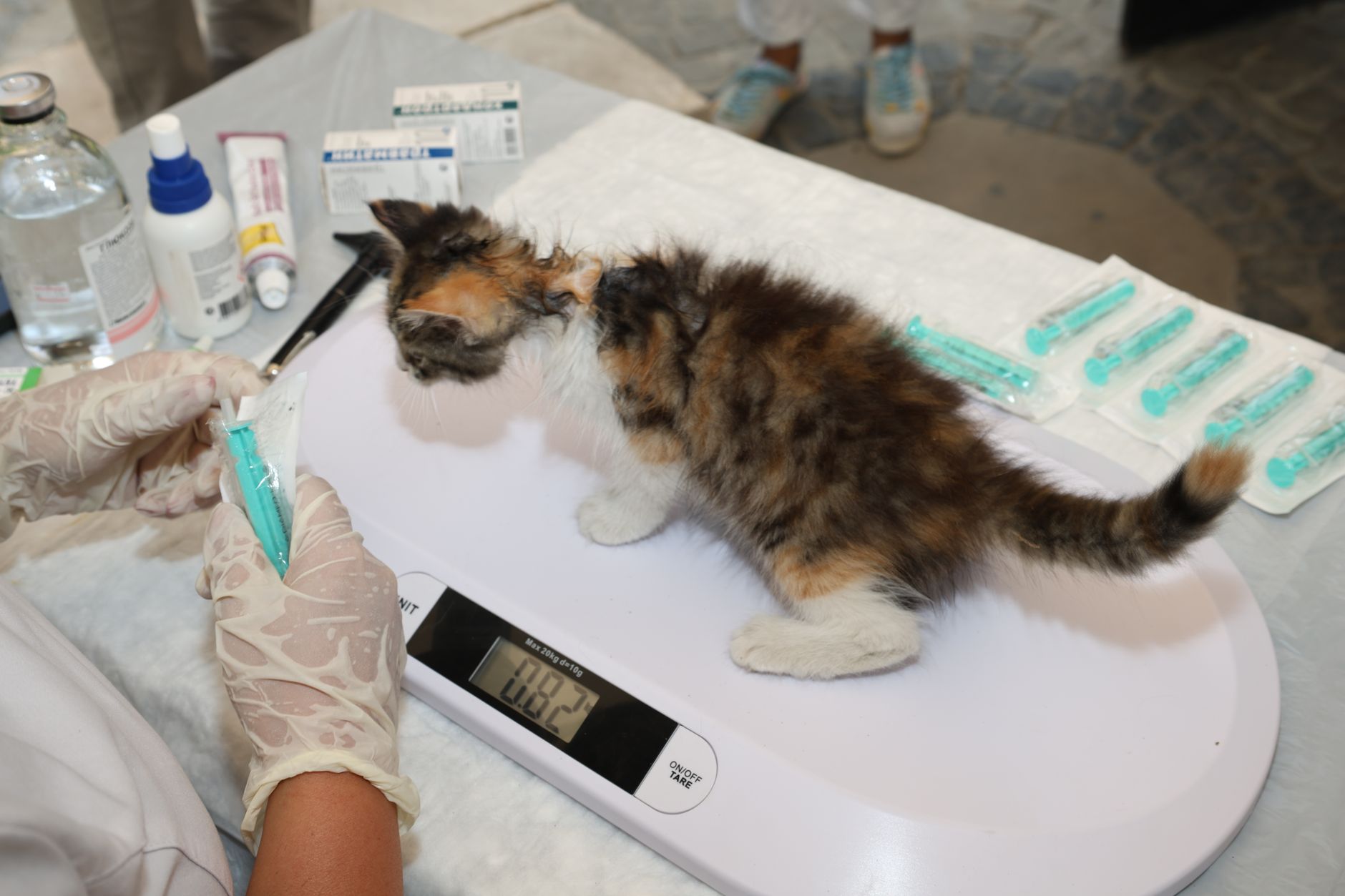
A typical shift mixes the routine with the clinical. You might restrain a dog for a blood draw in the morning, sterilize surgical instruments before an afternoon procedure, and monitor a cat waking up from surgery before you clean the kennels at close. BLS also lists helping with emergency first aid and collecting blood, urine and tissue samples. Veterinary services account for 86% of the jobs, and BLS notes the schedule can include nights, weekends and holidays, which is worth knowing if you’re fitting a program around other work.
You don’t need a license, and you don’t need to pass the VTNE. BLS says most vet assistants enter with a high school diploma and short-term on-the-job training, and certification is not mandatory. So why take a program at all? Three reasons: a clinic is more likely to hire you with structured training and an externship behind you, a program gets you a placement inside a clinic you might not get into cold, and some programs count toward a vet tech degree later.
BLS puts the median at $38,150 a year, or $18.34 an hour (2025), with 132,100 jobs and 9% projected growth from 2025 to 2035. Vet techs earn a median of $47,380 a year, so the assistant job is often a first step rather than a final one.
How the Vet Assistant Programs Ranking Works
This ranking puts NAVTA-approved programs first, then orders by the shortest stated length, then by the lowest published cost. One program per school appears. NAVTA, the National Association of Veterinary Technicians in America, approves veterinary assistant programs, and graduates of an approved program can sit for its Approved Veterinary Assistant (AVA) exam.
The AVA exam costs $100 and is administered through VetMedTeam, with an exam mentor observing you. The designation lasts two years and renews with at least 10 hours of veterinary continuing education. It’s optional, but it gives an employer a recognized name for your training.
9 of the 85 programs are NAVTA approved. The rest aren’t worse by definition. Many are solid public certificates. But if you want the AVA designation, only an approved program gets you to the exam.
The NAVTA-Approved Programs
Front Range Community College in Westminster, Colorado ranks first: a NAVTA-approved, hybrid certificate of 16.25 credits that runs one to two semesters. It’s at a public college that says federal financial aid is available, which matters: 42 of the 85 programs are at schools that say the same.
Six Ross Medical Education Center campuses come next: Canton, Erlanger, Huntsville, New Baltimore, Portage and Warren. Each runs 36 weeks, followed by a six-week externship. The Michigan campuses list the program in six modules with a hybrid format.
Holyoke Community College in Massachusetts runs its NAVTA-approved certificate over one year part time, with selective admission and an orientation in late August. Renton Technical College in Washington runs four quarters.
How Vet Assistant Programs Compare
Programs split roughly into public certificates and private career-school diplomas. Here’s how a sample compares on the figures they publish:
| Program |
Length |
Format |
Externship or clinical |
Published cost |
| Front Range Community College (CO) |
1-2 semesters |
Hybrid |
|
|
| Ross Medical Education Center-Canton (MI) |
36 weeks plus externship |
Hybrid |
Six-week externship |
|
| Escondido Adult School (CA) |
Two courses over two semesters |
On campus |
|
$1,400 total |
| Lake Technical College (FL) |
About 25 weeks |
|
|
About $2,160 tuition |
| Windward Community College (HI) |
Two semesters |
On campus or hybrid |
20 hours a week under a veterinarian (hybrid) |
About $4,061 (2020 estimate) |
| Milwaukee Career College (WI) |
30 weeks day or 38 evening |
On campus |
6-week externship |
|
| Pima Medical Institute-Phoenix (AZ) |
About 9 months |
On campus |
240-hour externship |
|
| Carrington College-Tucson (AZ) |
36 weeks |
Hybrid |
180-hour externship |
|
| Medical Career & Technical College (KY) |
36 weeks |
On campus |
180-hour externship |
$10,150 tuition plus $2,200 fees |
| Stautzenberger College-Maumee (OH) |
12 months |
Online |
|
$16,100 tuition |
Blank cells mean the school lists no figure for that field.
Externship Hours: The Part That Gets You Hired
The externship is where you work in a real clinic under supervision, and it’s often how assistants land their first job. Hours vary widely. Pima Medical Institute’s certificate includes a 240-hour externship within about 9 months (316 class hours and 164 lab hours on top). High Desert Medical College in Lancaster, California lists 200 externship hours. Carrington College’s Arizona and Washington campuses and Medical Career & Technical College list 180 hours, Stellar Career College in Modesto 166 and Central Coast College in Salinas 150.
More hours mean more time with patients and more chance to impress a clinic that might hire you. If a program lists no externship, check how you’ll get clinical experience. Windward Community College’s hybrid track solves it the other way: you work at least 20 hours a week under a licensed veterinarian while you study.
Cost: From Adult School to Career College
Only two programs publish a whole-program total, and they sit at opposite ends. Escondido Adult School in California charges $700 per course, $1,400 for both courses of its veterinary assisting pathway, with additional fees on its registration page. Medical Career & Technical College in Richmond, Kentucky lists $10,150 in tuition plus $2,200 in fees.
Others publish a tuition figure. Lake Technical College in Florida lists about $2,160 plus books and fees. Stautzenberger College’s online diploma lists $16,100 in tuition, about $2,900 in fees and about $800 for books. Windward Community College’s estimate of about $4,061 for residents is based on Fall 2020 tuition, so expect today’s figure to differ.
Because certification isn’t required and the BLS median is $38,150 a year, a program priced in five figures takes a long time to pay back. If cost matters, a public certificate or an adult-school pathway gets you the same entry-level job.
Public Certificates Worth a Look
48 of the 85 programs are at public schools, and they’re usually the lowest-cost route. Wichita State University’s Campus of Applied Sciences and Technology runs a one-semester certificate of completion, the shortest on the list. Black Hawk College in Moline, Illinois runs a one-year certificate that asks only for a high school diploma or equivalent. Joliet Junior College’s certificate has open enrollment each semester for students 16 or older, so you can start while finishing high school.
Community colleges in smaller towns run them too. Blue Mountain Community College in Pendleton, Oregon offers a one-year certificate with a cooperative work experience in a veterinary practice, Eastern Wyoming College a one-year Veterinary Aide Certificate, and Central Carolina Community College in North Carolina a three-semester diploma. Eastern Florida State College and St. Petersburg College both offer college credit certificates in veterinary assisting.
In Puerto Rico, CEM College-San Juan and Columbia Central University-Caguas run 12-month veterinary assistant diplomas, each with a clinical or externship component.
Online and Evening Options
Three programs are fully online: the College of Southern Idaho, the University of New Hampshire and Stautzenberger College-Maumee. 18 more are hybrid. Valley College-Cleveland teaches theory online with lab skills on site on weekends, and Carrington College’s campuses run a blended certificate.
If you work days, look at evening schedules. Milwaukee Career College runs 30 weeks by day or 38 weeks by evening, and High Desert Medical College 35 weeks in the morning or 43 in the evening.
Before You Enroll
A short checklist keeps you from paying for training a clinic won’t value:
- Externship hours. Look for a stated externship. 150 to 240 hours is the range most career schools list.
- NAVTA approval. Only the 9 approved programs lead to the AVA exam, if you want that designation.
- Total cost. Add tuition, fees and books. Medical Career & Technical College’s $10,150 tuition becomes $11,850 in its 2025-26 catalog total once fees are in.
- Financial aid. 42 programs are at schools that say aid is available.
- Schedule. Day, evening, weekend or online. Only 5 programs offer a part-time path.
Using a Vet Assistant Program as a Step to Vet Tech
Many students use an assistant certificate as a test run before committing to a two-year degree. Some schools build that path in. Gateway Technical College in Wisconsin embeds its veterinary assistant technical diploma inside its vet tech associate degree. Colby Community College in Kansas offers a Veterinary Nursing Office Assistant certificate next to its distance vet tech degree.
If you’re planning that route, check your state’s vet tech rules before you start, because the degree you’ll need has to meet them. If you trained at a Ross campus in Michigan, the Michigan credential page explains the steps; in Colorado, see the Colorado credential page.
When you’re ready for the degree, the best vet tech schools ranking and the online vet tech programs guide show your options. To find a program near you now, use the school finder.